
Microscopes
UV Fluorescence
Near UV (300 – 400 nm) fluorescence in proteins originates predeominantly from Trp and Tyr residues. By choosing an excitation wavelength that induces Trp and, to some extent, Tyr fluorescence, we can cover almost all protein molecules.
When it is present, fluorescence from Trp dominates over fluorescence from Tyr. Trp may also quench Tyr fluorescence. Trp fluorescence itself may be quenched by the presence of nearby charged residues, bound ligands and cofactors, due to energy or electron transfer. The fluorescence quantum yield of Trp in proteins varies from 0 to 40%. Hen egg white lysozyme, with 3 Tyr residues and 6 Trp residues has a near-UV fluorescence quantum yield of 12%, owing mainly to two Trp residues.
Prolonged excitation of Trp residues can result in photochemical conversion of the amino acid and lead to a loss of near-UV fluorescence. [Repeated excitation at shorter wavelengths can cause denaturing and/or degradation of the protein.]
To avoid damage to the protein crystals, excitation and emission must be very efficient. We achieve this in the UVEX by careful design of the optics, choice of optical elements and a very sensitive imager.
UV Absorbance
In the event where UV fluorescence is quenched due to the binding of a small molecule to the protein, UV transmission is a more dependable means of identifying the protein crystal. In fact, when the apo-protein is fluorescent and the complex is not, comparison of UV fluorescence image with UV transmission image provides a powerful method for detecting crystals of the complex.
UV transmission imaging also is very suitable for crystals of nucleic acids and does not require staining the crystals with fluorescent dye for identification.
UV transmission requires UV-transparent optics, filters different than needed for UV fluorescence, and a camera sensitive down to 280 nm.
The optics and camera of the UVEX are suited for UV transmission imaging. The camera is cooled to minimize the contribution of hot pixels. The change-up of filters and light source in absorbance option are implemented seamlessly so that it’s a snap to switch between UV fluorescence and absorbance modes.
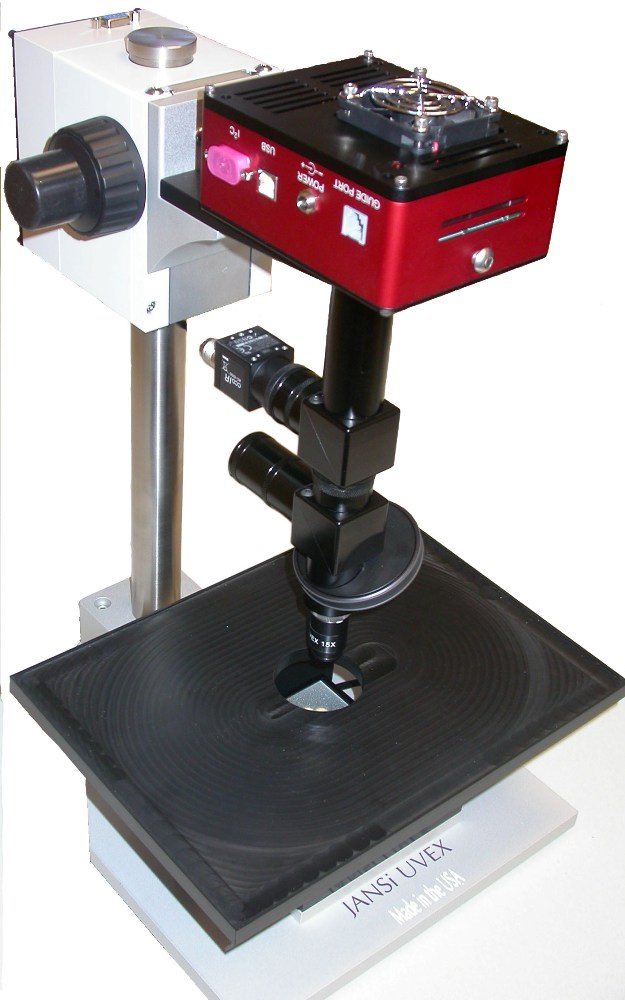
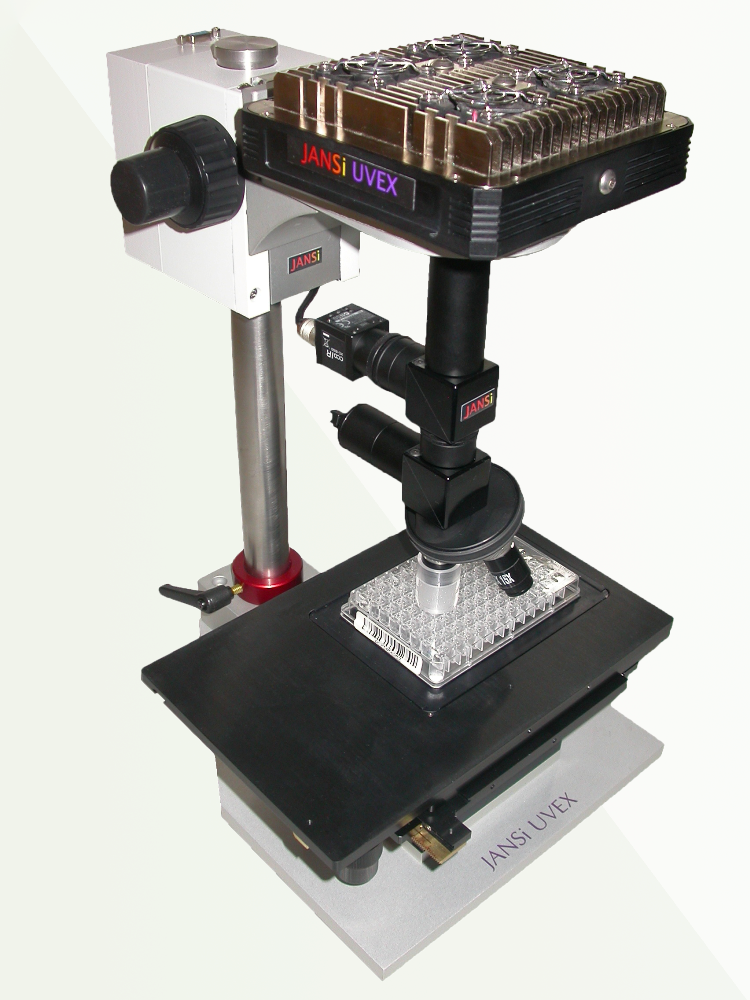
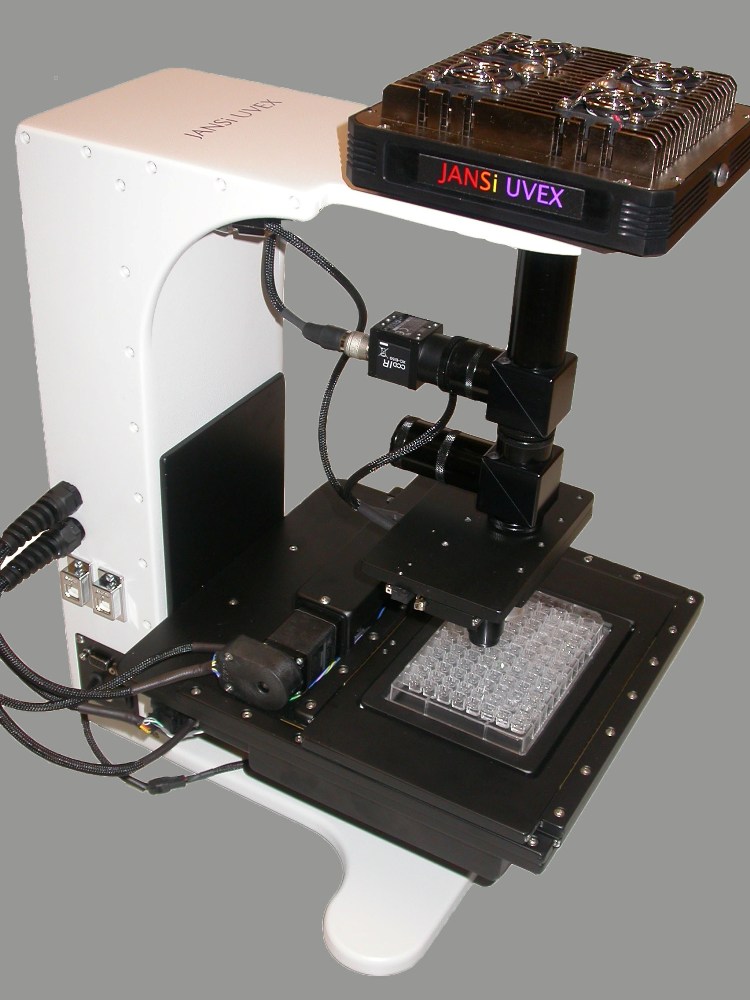
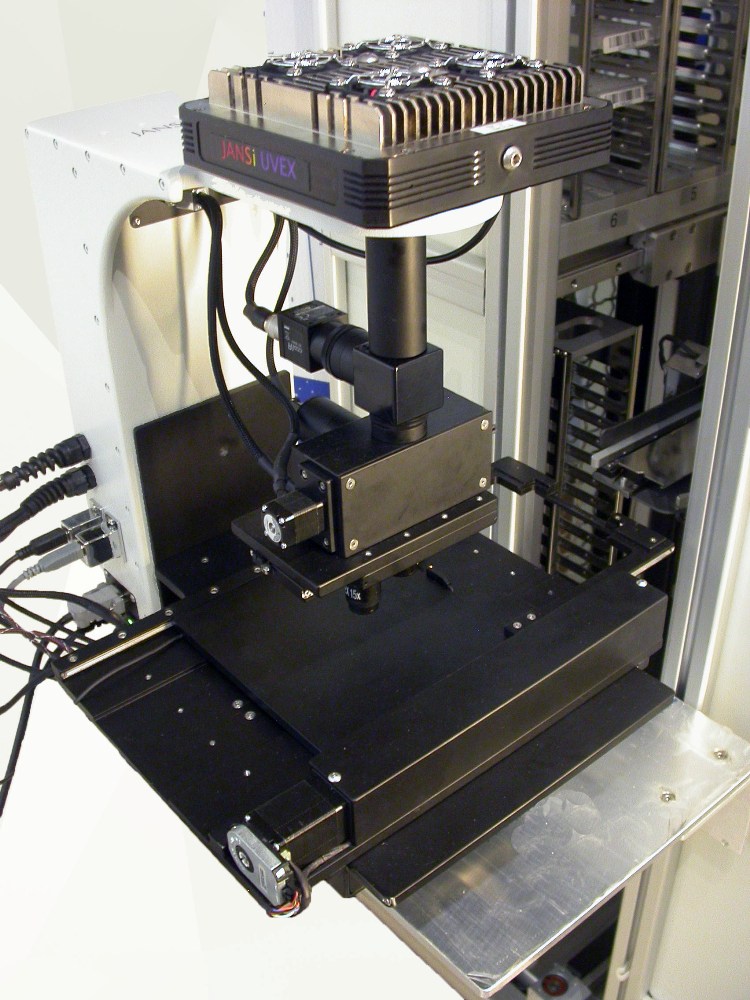
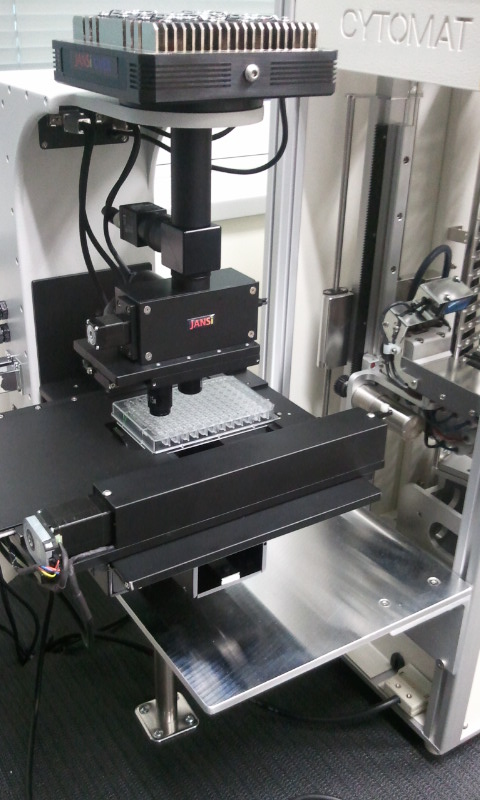
Specification:
UVEX-m & UVEX-M – manual models
UVEX-P – automated model for plate scanning
UVEX-PS – automated model with plate storage (capacity 42 – 504 SBS plates)
Add an A at the end for Absorbance option
Common to all models
Dimensions 12″ x 12″ x 18″
Weight 30 lb
Electrical 110 – 240 V; 50 – 60 Hz; 600 W max
Light sources All LED, pulsed on-demand, instant on, instant off
Optics Nominally 5x and 15x objectives standard, other magnifications optional
Optical Resolution as low as 0.5 mm/pixel; coverage area 3 mm
Detector Cooled monochrome camera with high UV sensitivity